




Robin Longbottom on how evidence can still be found locally of a historic skill which has changed little over the centuries
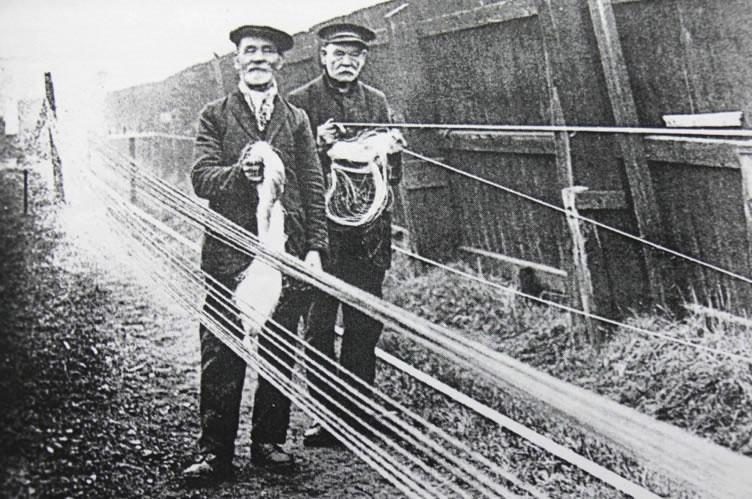
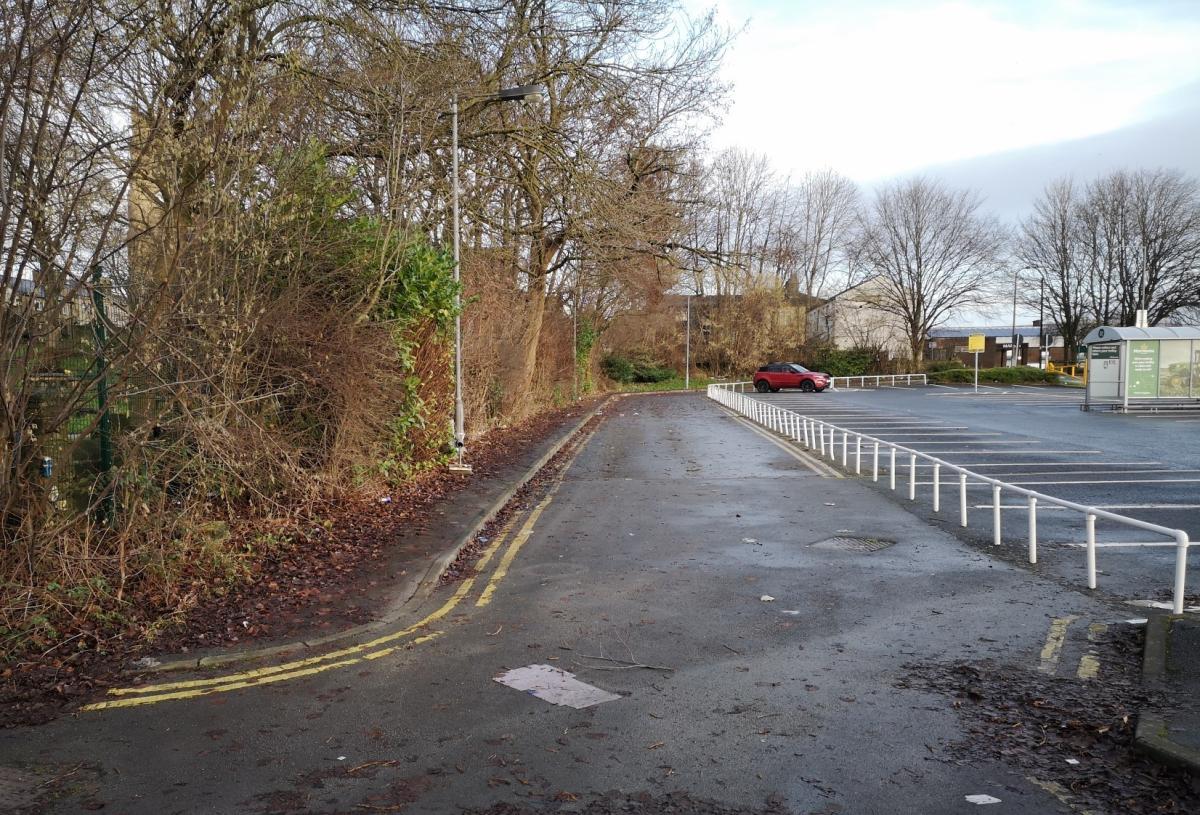
ALONGSIDE the churchyard wall that faces onto Morrisons supermarket in Keighley, and now hidden by undergrowth, there was once a rope walk where ropes and twine (string) were made. The work was done in the open air, and so the wall is the only remaining witness to this now forgotten industry.
Rope and twine were once everyday essentials. The farmer used rope to tether his animals, builders used it to lash scaffold poles together, waggoners secured their loads with it and mills used it to lift goods up and down between floors. Twine was used to make nets to hold forage for cattle and horses, shopkeepers tied parcels up with it, housewives used it to tie up their puddings and everyone used it to lace up their boots and shoes.
The difference between making rope and twine was only a matter of scale. A finished rope had three strands whilst twine originally had only two. The word twine was eventually used to describe all multi-stranded products including string, cord and mill band. The length of a rope was dependent on the length of the rope walk – the one at Chatham Dockyard is a quarter of a mile long. The rope walk in Keighley was more modest; the churchyard wall is 288 feet long and therefore ropes of 200 feet, or more, could have been made.
William Beecroft is the earliest recorded rope maker in Keighley. He arrived in the town in the 1770s and married Ann Draper at the parish church in 1779. After her early death he married Ann Booth at Kildwick Church and is described in the marriage entry as "William Beecroft of Keighley Roper and a Widower". William’s two sons, Henry and John, followed him into the trade. Henry died unmarried and John continued the business, and passed it to his two sons, William and John. Once the rope, or twine, had been made it was taken to their shop in Low Street where the rope was made up into hanks and the twine was balled ready for sale.
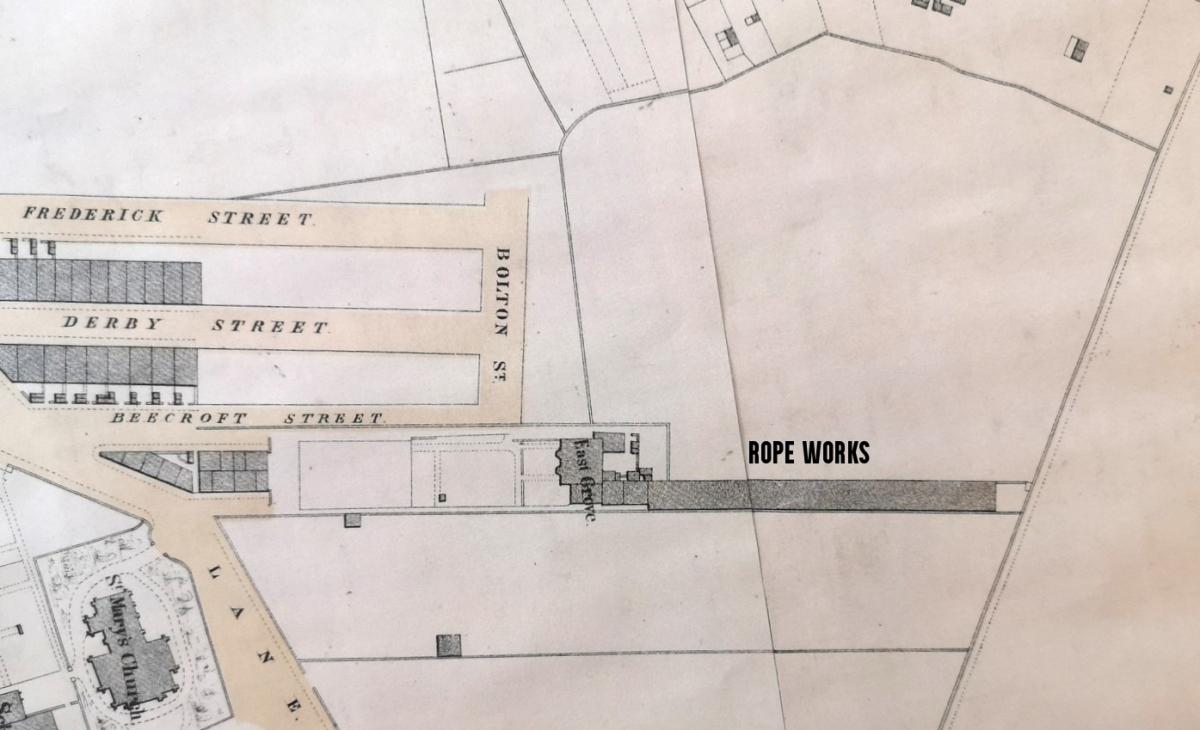
After their father died in 1852, the two brothers remained at the rope walk until the early 1870s when the land came up for development and they relocated to East Grove, just off Dalton Lane. East Grove House was owned by their brother-in-law, William Naylor, who was in partnership with Lister Marriner at Greengate Mill. Naylor owned land to the rear of his house on which the Beecroft brothers erected a rope works consisting of a shed the same length of the old rope walk, together with ancillary buildings for storing materials and the finished product. The brothers retained the shop in Low Street for retail sales.
Both brothers died unmarried, William in 1881 and John in 1890. After the death of John one of their employees, Isaac Sharpe, took over the business. He ran the rope works with his son, Fred, until about 1919 when it ceased trading.
Although rope walks are now largely a thing of the past there is still one in Haworth at Wyedean Weaving. It is shorter than the one in Keighley, but the roper still walks the length of it to make horse leads for the King’s Troop, Royal Horse Artillery. Eighteen lengths of cotton twist are walked out twice from nine bobbins and attached to 18 hooks. The 18 lengths are spun clockwise and then removed from the hooks and reattached to three equally spaced hooks (six per hook) and they are then spun counter clockwise. The three twisted strands are then attached to one hook and spun clockwise, and the rope is finished. With the exception of electric power, it is a process that has remained unchanged since William Beecroft set up his business in Keighley nearly 250 years ago.


Share