


Robin Longbottom on the history of a wire firm which continues to manufacture its products in the town
KEIGHLEY was once a hive of small industries, many of which supported either the worsted or machine tool trade.
However, one of the exceptions was the business set up by Bethel Rhodes. He came to the town from Bradford shortly after his marriage in 1868 and opened a small wire-working shop at Sandywood Villas, at the far end of North Street.
He was born in Shelf, near Hipperholme, and was the third of four sons of Joseph Rhodes, who had taken up as a wire weaver in the early 1830s. The ready availability of machine-drawn wire, particularly from wire works in Halifax, enabled specialists like Joseph to establish themselves making wire products. He was making a variety of goods including wire netting, fire guards, riddles and sieves. In the 1850s he moved the family to Manningham in Bradford where wire hurdles, used by wool sorters during the process of cleaning and grading a fleece, were in demand.
Joseph brought his four sons up in the trade. His eldest son, Thomas, established himself at Mildred Street, near Undercliffe. His second son, Richard, opened a wire works in Booth Street, Bradford, where he employed three men and a boy, together with his sister-in-law – who was the saleswoman in the shop. William, the fourth and youngest son, remained working with his father.
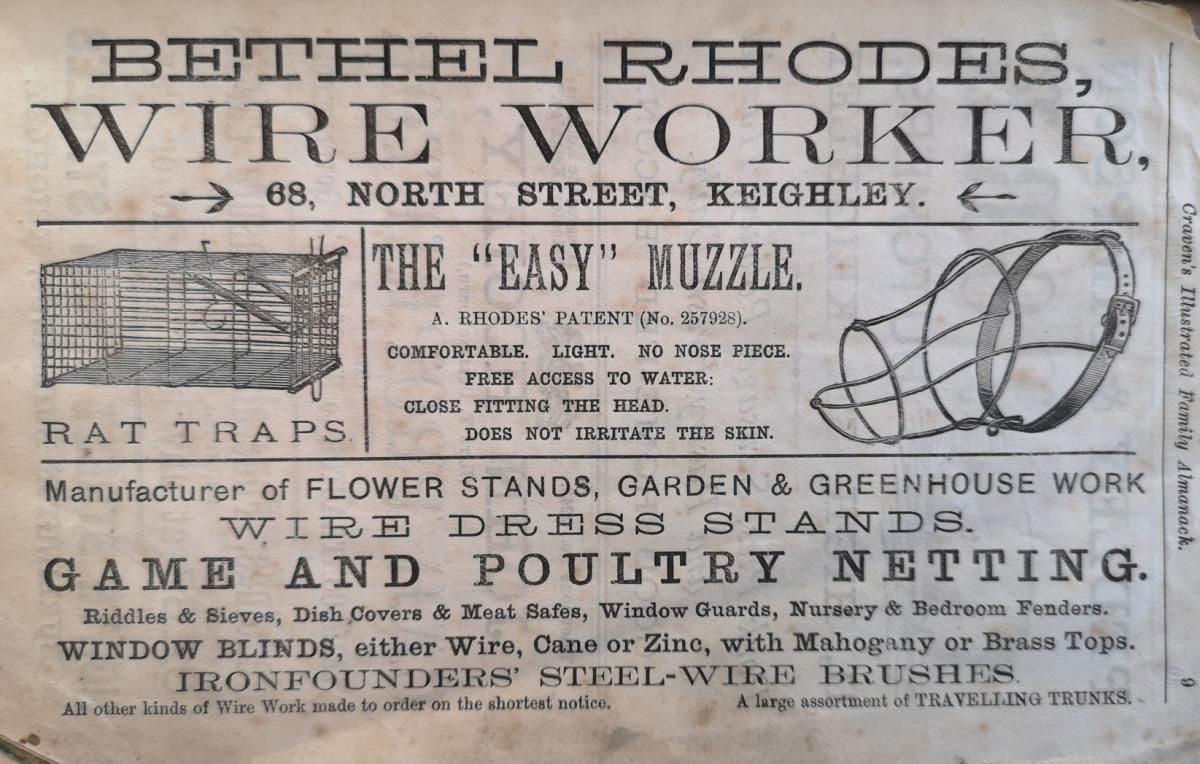
After moving to Keighley his third son, Bethel Rhodes, did not remain at Sandywood Villas long before he moved to premises "specially adapted to the trade" in Fleece Street, off East Parade. He remained there for over 10 years, employing one man and a boy and making a variety of wire goods including bird cages, traps for vermin, muzzles for dogs and weaving wire netting and mesh by machine.
By 1891 he had moved the business to 68 North Street where he lived above the shop. Here he was recorded as a wire worker, wire weaver and wire brush maker and employed his three eldest sons – Henry, Joseph and Arthur. His fourth son, Charles, was apprenticed to a tailor and his youngest son, Leonard, died in boyhood.
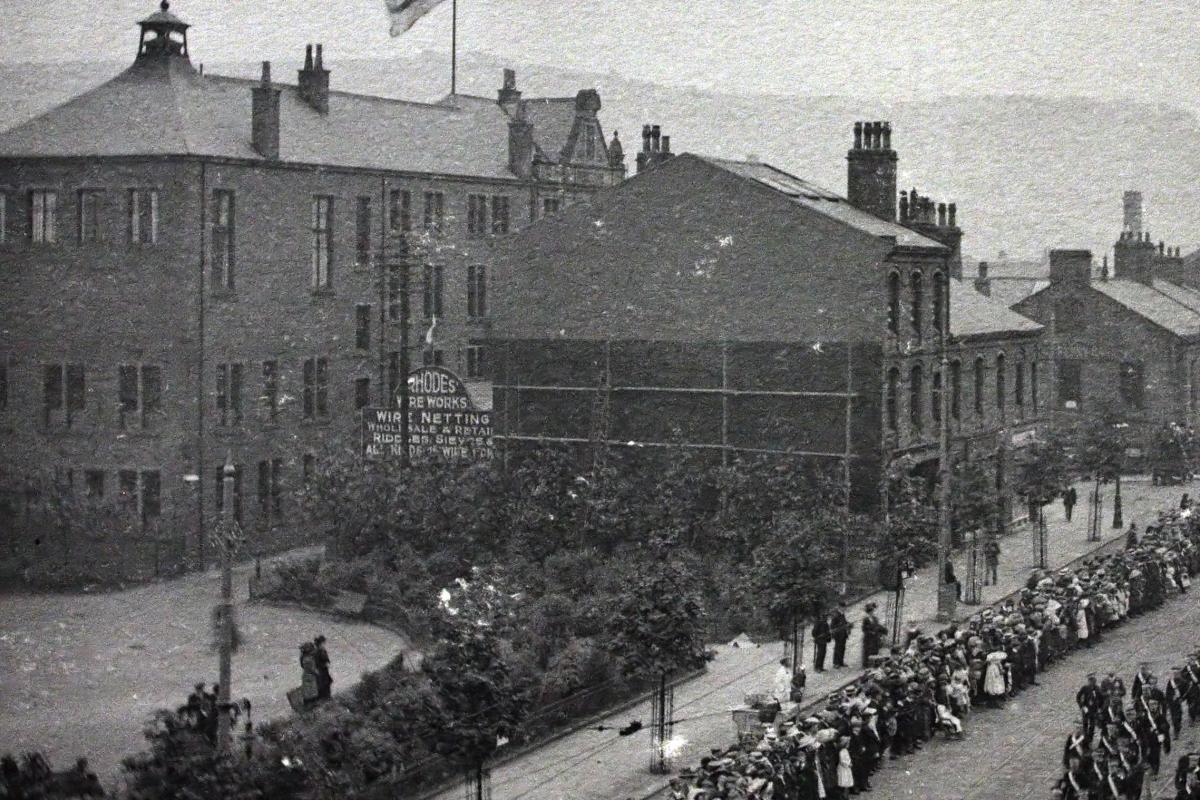
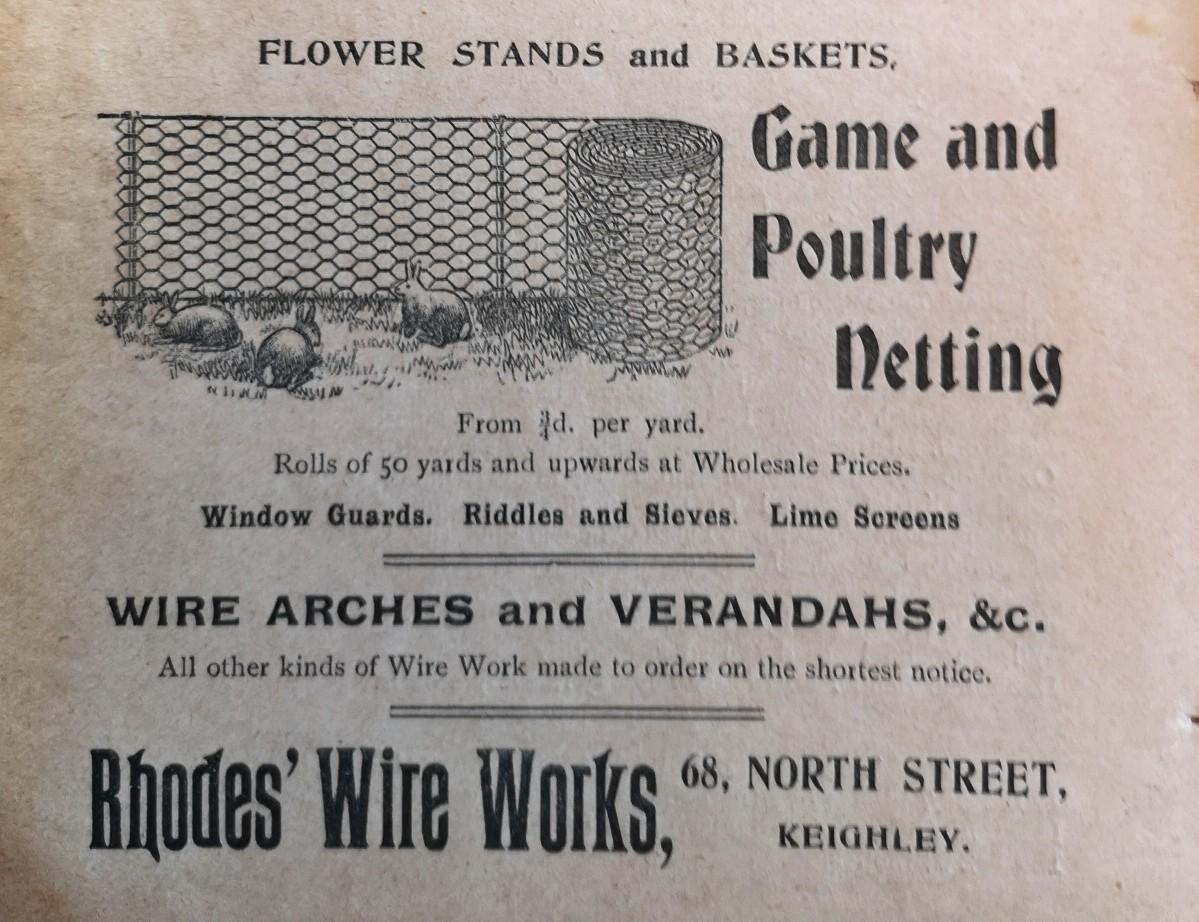
He had a large workshop to the rear of the shop and after it was compulsorily purchased to extend Keighley Town Hall, he worked out of a smaller shed and on the top floor of his shop premises. His range of goods now included flower stands, stands for greenhouses and wire stands to display dresses in shop windows. However, he also continued to make rat traps, dog muzzles, fire guards, wire mesh for meat safes and wire netting.
By 1910 his eldest son, Henry, had left the business and opened a wire works at Lidget Green, near Bradford, and his third son, Arthur, had opened one in King Cross Street in Halifax. After his second son, Joseph, died in 1909, Bethel Rhodes – now a widower – was running the business with his son Charles, who had given up tailoring to join the firm. When Charles tragically died in 1911, Henry returned to Keighley from Lidget Green to manage the business.
Bethel – now aged 64 – looked towards retirement and within a few years had moved to just outside Morecambe, to live with his widowed daughter Annie. He died in Morecambe in 1932.
After Henry died in 1924 his son Charles Henry Rhodes and his cousin, Bethel (the son of Charles Rhodes), took over the business. They expanded the firm and eventually relocated it to Lawkholme Mills, Alice Street, Keighley. Although they continued to make vermin traps and other small items the business now concentrated on making weld mesh products such as trays, baskets, grilles, machine guards and general wire goods in stainless steel.
Today the company continues to manufacture wire products. They employ about 14 workers who work both traditionally and with computer-controlled machines.